Showing posts with label Kodo. Show all posts

Monday, August 10, 2009

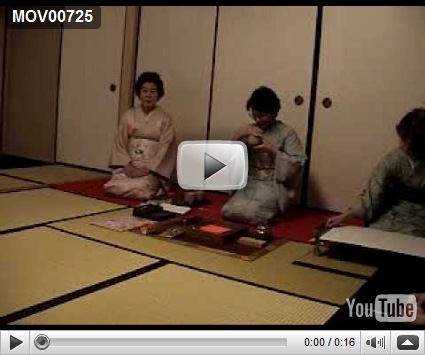
Kodo Group in Santa Fe New Mexico

The Santa Fe group is organized by Christa Obuchowski of the Aroma Botanica Institute in Santa Fe, New Mexico. Christa is a well known Aromatherapist, Perfumer, and Speaker who lives and works in Santa Fe when she is not travelling the world in search of the secrets of scents.

You can read more about her on Trygve Harris’ blog :

http://absolutetrygve.blogspot.com/2008_09_01_archive.html

Read about agarwood from Trygve at:

http://absolutetrygve.blogspot.com/2009/07/agarwood-wild-or-farmed.html

The group is one of the most talented I’ve seen and I was a little surprised this Sunday at how many people were not only able to identify the “untried” incense in a modified version of Kasumi Koh, but actually guess the type of agarwood from the description in the Rikkoku descriptions.

IMG_0286

If you live in New Mexico and would like to participate send me an email. You can find my email on our website at http://www.oller.net/. Sorry to be so evasive on the email but if I post it here spammers will grab it and, well, you know what that means!

David

Friday, June 5, 2009

Kumiko – The Games Begin

In this series I am going to skip the details of preparing the Kodo cup for presenting the incense to the group playing the games. You can find instructions on preparing the cup for “listening” at the Japanese Incense website. The instructions there are adequate to present an informal ceremony.

As far as the formal presentation, I feel this is something that should be observed in person and conducted by someone trained in the traditional Japanese Iemoto system. This will give you the fullest experience possible.

However, conducting your own, or attending an incense ceremony conducted by someone with no official training is a great way to enjoy wonderful aromas and have fun testing your skills at identification. Later, if you do go to Japan you will be better prepared to enjoy the experience.

Informal Incense Ceremonies have a history of their own. Before Kodo there were informal and semi-formal incense parties called Koh-Kwai. The “Game of Ten” from those times is still used today.

To prepare your own Incense Ceremony I recommend recruiting people to help with the event. You need help to prepare and serve Tea Sweets and Tea, and if you’re really lucky perhaps you can find a student of Chado (Way of Tea) to make Matcha for you. If not, serve your favorite Green Tea.

I presented one game earlier (Kasumi-ko). You can find other games online or in books.

Here is one of my favorites:

Sanshu Koh (Game of Three)

The Contestant

This Kumiko is based on guessing which Incense is the same or different. As a player you will examine three cups of incense. On your score card you will register which were the same. For example: You feel the first and second cups are the same and the third is different. Write down your guess and it will be picked up by the scorekeeper.

The Komoto

Traditionally, the Komoto prepares nine envelopes, numbering three of them #1, three of them #2, and three of them #3. Next the Komoto places three samples of one type of aloeswood in envelope #1. Next comes three samples of a different incense in envelope #2. Follow suit on the last type.

After all envelopes are prepared the Komoto wil shuffle the envelopes and chooses three. This makes the total of five possibilities: All same, All different, 1 & 2 same, 1 & 3 same, 2 & 3 same.

There are, of course, an enormous number of games. Many can be found in books on Kodo or on the Internet searching “Kumiko” I saw some very nice presentations.

David

Tuesday, June 2, 2009

Opening the Doors of Kodo

(This ritual may vary according to tradition and school)

Following the Teisho (Incense Lecture) the ceremony begins with a ritual known as Opening the Doors of Kodo. This ritual begins with the Komoto* opening the door behind the presentation area while on their knees. Next, the Komoto enters the room with the hitori-gouro containing heated charcoal, closes the door, and places the koro next to the “Random Box” (Midare bako) At this stage the Fukusa is presented, folded, and used to clean the incense cup (kiki-gouro)** After cleaning the Fukusa is refolded and placed in the Midare bako (Random Box) and the Incense Cup (Kiki-gouro) is placed upon it. Next the first the ash preparing utensils are moved from the silver vase to their position next to the cup. These are: feather, tamper, and metal chopsticks.


*Literally translated as Incense Master, however in many cases it will be an advanced student performing this function. I certainly can’t speak with authority on the matter but I have never heard the term Komoto or Incense Master applied to what one may consider a true incense master. Depending on the school, after several years, a student may be given a certificate as a Koushi which means incense teacher or lecturer. When a person becomes the head of a school, or the head of a branch of a school the carry the title Souke which literally translates as Head of the Family.

** You may be familiar the term Koro (incense furnace) Gouro is used when it is proceeded by the type of Koro e.g. Hitori-gouro, (Fire Koro) Kiki-gouro, (Listening Koro) etc.

Thursday, May 28, 2009

Teishu (Incense Lecture)

DSC00733

After you finish your tea, the sweet napkins and teacups are picked up. At this point score sheets and note pads will be brought to you. The notepad is for writing down any thoughts to remind you about the incense you just sampled. The score sheet is what you write down your answers on. This varies according to the Kumiko (Game).

This is the point where the host of the ceremony will give a talk and you will lectured on the History of Kodo, how to hold the Kiki-gouro, (incense cup) how to listen (smell) the incense, and you will be told about the six kinds of aloeswoods used. This will include the classic descriptions of the aroma of each. You can find all of this information at:

http://www.japanese-incense.com/aloeswood.htm

DSC00734 DSC00735

Sunday, May 24, 2009

Tea in Kodo

After taking your seat, one of the Kodo staff will bring you a tea sweet, and soon after you will be brought a cup of Thin Matcha tea. In the Tea Ceremony there is both Thick and Thin tea, usually only the very finest tea is served in the thick style.

When the treats and tea are brought to you, place your hands in front of you and bow to the server. Next you will pick up the cup and rotate it 180 degrees before taking three generous sips, finishing all of the tea on the third sip. Lastly you rotate the cup 180 degrees again and place it in front of you. When the server picks the cup back up, you bow again to thank them.

DSC00730 DSC00731 DSC00732

Matcha tea is a very special tea, two weeks before the tea is ready to pick the plants will be shaded. This prevents tannin from forming and allows for making a stronger tea without becoming too bitter. The younger more tender leaves are dried and powdered, that is Matcha. Matcha is prepared by adding hot water to the powder and whipped with a tea whisk creating a nice foam on top of the tea. It has quite a kick, something like a double shot of Espresso. It’s also believed to be very good for you!

Wednesday, May 20, 2009

Taking you place in Kodo

After examining the Tokonoma you take your place for the ceremony. There are one or two “Honored Guests” and they will sit (Japanese Style) in positions where they will be served first. Here is where the two styles differ. In the Oie Ryu (Oie School) the Komoto (person preparing the kodo cup) passes the cup to their right, and each member of the Renshu (attending group) does likewise. In the Shino Ryu the cup is passed to the left.

yoshiko5 Shino Style

In the USA we are a little less organized and equipped, we also are not so adept to sitting the Japanese way, but our heart is in it and below is an example. The Kodo ceremony (Kouseki) was performed at the “White Buffalo Healing Arts Center” in Phoenix, AZ. The Komoto’s name is Gina.

gina

Tuesday, May 19, 2009

The Tokonoma

Incense rooms have an alcove, (Tokonoma) where the host will make a display of some kind, usually a combination of a flower arrangement and piece of art, possibly calligraphy. Entering the room you visit this area and spend a small amount of time in appreciation of the care taken in the arrangement. A small detail can show great thoughtfulness. You may not notice all that went into it, but to pass it by thoughtlessly would be very rude. It will probably have elements of the season, and it may have something the Honored Guest is known to appreciate, a favorite flower, artist, or textile.

DSC00727

Above: You can see the Tokonoma behind behind the lady with the incense cup (kiki-gouro).

Saturday, May 16, 2009

Video of Kodo - Baieido

Kodo History (For Beginners)

For those who don’t know where to start, or anything about Kodo, it is the Japanese Incense Ceremony or literally “The Way of Incense.” The word Koh meaning incense and Doh meaning way.

Kodo is one of a group of three cultural arts of Japan along with Chado (Way of Tea) and Ikebana (Flower Arrangement) that are closely related and practiced since feudal times.

yoshiko5

Both Chado and Kodo incorporate elements of Ikebana as well as elements of each other.

Matcha tea and sweets are served at the beginning of an incense ceremony (Koh Seki) and incense plays varying roles in Tea Ceremonies of which there are many forms.

Each, of course, has elements of the season included. About the seasons I don’t know much. There are four major seasons, but I was briefly shown where the four were also divided by four with a total of twelve.

DSC00723

The ceremony above was in the early spring and if you look closely you can see a small colorful bag at the corner of the mat. The tie of the bag is in the shape of a Cherry Blossom (the beginning of spring)

Friday, May 15, 2009

Kumiko

Originally posted in Alices Restaurant in July, 2003

Here is a Kumiko or Incense Game for you. I don't think it's in Pybus
or Morita (Please correct me if I'm wrong) This would be a good one
to try with the incense-stick (senko) method I described earlier.

It is a little different than games like Genji Koh and Sanshu Koh in
that it uses "trial" incense like Jitchu-koh and the object is to
identify two of the incense you were allowed to try first, and
identify the third from not having smelled it in the trial, and you
try and guess them in the order they are served.

This is a game for Cherry Blossom season.

Kasumi Koh

In this game three different aloes woods are used.

Three packages of one are prepared and marked "Toyama" (Mountain in
the Distance) . One package is set aside as a trial incense.

Two packages of another aloeswood are prepared and
marked "Harukasumi" (Spring Mist). One package is set aside as a
trial incense.

One package of a third aloeswood is prepared and marked Sakura
(Cherry Blossom). No trial package is prepared.

Next the trial package of Toyama is placed on the Koro and passed
around the room. Contestants (Renshu) listen to the incense and make
notes, usually according to the characteristics: Sweet, Sour, Bitter,
Hot, and Salty, but any notation is allowed and if you recognize one
as one of the rikkoku, or feel it is similar to one of the rikkoku
then that may be noted as well.

The second serving is the trial package of Harukasumi, and it follows
the same guidelines as the first.

There is no trial sample of Sakura, and out of the six original
packages you have four left that haven't been examined. These four
packages are shuffled and then passed around for examination.

The object is to guess the order of the remaining four incenses. For
example: 1. Toyama, 2. Toyama, 3. Sakura, 4. Harukasumi

Thursday, May 14, 2009

First & Second Generations of Kodo


First & Second Generations of Kodo

Tuesday, May 12, 2009

Takenoo Joo

Left out of the traditional Kodo lineage charts was Takenoo Joo. He was originally a Sakai Merchant who went to study Renga poetry, Tea, and Incense with Sanetaka Sanjonishi. Returning to Sakai he became a monk at Nanshu-ji and passed his knowledge on to Sen no Rikyu.

If you are ever in Japan I highly recommend visiting this small temple in Sakai City.

Sunday, May 10, 2009

Kodo Article from Alices Archives

Sat Dec 13, 2003 3:49 pm

Dear List,

Over the past year I have been working on updating information about Aloeswood, Kodo History, and the Rikkoku. Please understand, even among Japanese experts there are different opinions on these matters.

There has been a lot written on the subject, and a great deal comes from the original source of Lafcadio Hearn, and next from the text by Kiyoko Morita. In Morita's work Shino Soshin is said to have been requested by Shogun Ashikaga Yoshimasa to classify his 130 varieties of incense, and he solicited the help of Sanetaka Sanjonishi and together they established rules for the Kodo games etc. I'm afraid I can't say too much about Shino's contributions, and Morita may very well be correct. However, I cannot verify her version either.

On that matter, those of us who have studied histories of Buddhism and Zen in both China and Japan can tell you that it is quite common for schools to assemble histories which lend credibility to that school. The "Transmission of the Lamp" is one example in Zen. Written several years later it describes a history and lineage of Zen that is just not accurate. I have tried to find more information on Soshin Shino, but there is very little written about him that I've found. The Shino ryu website shows him has founder of their school and a student of Sanetaka Sanjonishi. The Japanese Kodo lineage charts also show him as a student of Sanjonishi.

In order to understand the history of Kodo, and examine it in its context, a certain amount of knowledge about the political and civil structures of the times is helpful. Prior to the Kamakura era in Japan, both civil and military power was in the hands of the Imperial Court. The beginning of the Kamakura era ends civil and military rule by the Imperial Court. Later, Ashikaga Takauji sided with the Imperial court and defeated the Kamakura Shogunate. At this time, the Muromachi period begins.

The Ashikaga Shogun shared more power with the Imperial court, but most of the military and civil authority was in the hands of the Shoguns and the Daimyo's. Culture matters were left mostly to the Imperial court. Daimyos were feudal landlords who were originally Samurai who were overseers of the lands belonging to the Japanese nobles. Later they came to own the lands themselves. Sasaki Doyo was one of these Daimyo who was a tea advocate.

In reading some articles it may be easy to confuse him with Ashikaga Takauji who was a famous collector of Aloeswood. According to many reports the Ashikaga shoguns were the first shogun to become collectors of Chinese arts and students of Chinese ceremonies and customs, where the Imperial courts were the previous holders of such treasures. However, I think it is reasonable to assume that Daimyo's and previous Shoguns were also interested in such matters, and this period really speaks of a codification of art & ceremony. Part of this codification was the appointment of officials who were art and culture experts in the service to the Shoguns. They were the Shogun's cultural curators or experts, called Doboshu. Ironically, the Doboshu are rarely mentioned in texts about Incense and Tea Ceremonies. Perhaps this is because of the later advent of the Iemoto systems where schools were formed around a central figure, master or teacher (Iemoto) However, some of the first Iemoto were actually descendents of the earlier Doboshu. One of the early Doboshu was named Noami or Shinno Noami. I don't know if it is possible this is same person as Soushin Shino, but it is more than likely that the person in charge of Incense & Tea cultures was a Doboshu. Sanetaka Sanjonishi was poet and expert on Chinese culture, and he was in the Imperial court, not the court of the Ashikaga Shogun, although he may have had close affiliation. The lineage charts, of course, are documents of the Iemoto schools rather than general historical documents. I have recently amended the history and especially the aloeswood section of Japanese-incense.com to reflect what I currently believe to be the most accurate information, and at the same time, I'm still working to get other books and documents translated so the information can be improved.

David

Blog Archive